
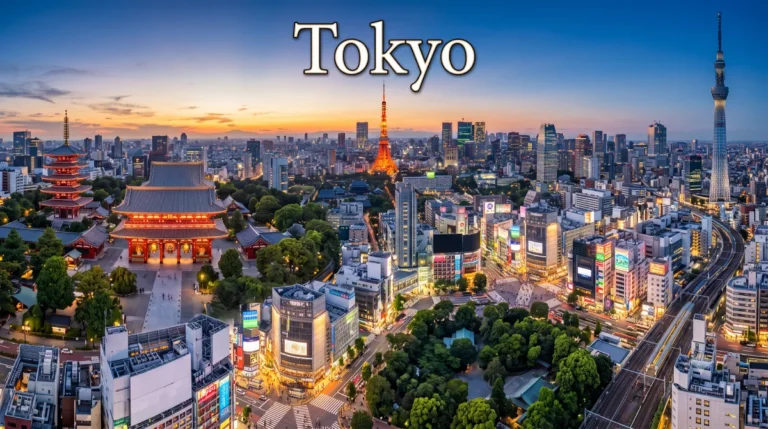
Tokyo is a city where ancient temples, quiet gardens, neon-lit streets, futuristic technology, and everyday Japanese life all exist side by side. One moment you can be walking through the historic lanes of Asakusa, and a short train ride later you can find yourself surrounded by skyscrapers, anime stores, and giant digital screens in Shibuya.
For a first-time visit, three days is enough to experience Tokyo’s major highlights without trying to cover the entire city. You can explore historic neighbourhoods, visit famous viewpoints, try Japanese food, and still leave some time to simply wander through the city’s streets.
Tokyo Travel Snapshot
| Travel Information | Details |
| Location | Tokyo, Japan |
| Ideal Duration | March to May & October to November |
| Best time | March to May & October to November |
| Best For | First-time visitors, culture, food, shopping, technology, families |
| Approx budget | ₹35,000 – ₹1,20,000+ Per Person* |
| Main experience | Temples, modern city life, Japanese food, shopping, technology, neighbourhood exploration |
Best Time to Visit Tokyo
Spring Season March to May: Spring is one of the most popular times to visit Tokyo, especially during the cherry blossom period. Parks and gardens become particularly attractive, while comfortable weather makes it easier to explore neighbourhoods on foot. If you are travelling during cherry blossom season, book accommodation and major transport well in advance because demand can be high.
Summer Season June to August: Tokyo’s summer is warm and humid, with periods of heavy rain during the early summer. The season also brings festivals, fireworks, and lively outdoor events. Plan sightseeing around the weather, carry water, and use the city’s extensive train and subway network to move between attractions comfortably.
Autumn Season September to November: Autumn brings more comfortable sightseeing conditions and colourful foliage later in the season. It is a good time to explore gardens, temples, shopping streets, and viewpoints without the intense summer heat.
Winter Season December to February: Winter is generally cooler and can be a comfortable time for sightseeing if you prefer fewer crowds and don’t mind colder evenings. Tokyo’s winter illuminations and seasonal atmosphere also make the city interesting after sunset.
Why Visit Tokyo?
| Experience | What You can do |
| Explore Senso-ji Temple | Walk through historic Asakusa, pass through Kaminarimon Gate, and explore one of Tokyo’s most famous temples |
| Experience Shibuya Crossing | Watch one of Tokyo’s most recognisable city scenes and explore the surrounding shopping and entertainment streets |
| Visit Tokyo Skytree | Enjoy panoramic views of Tokyo from one of the city’s most famous modern landmarks |
| Explore Akihabara | Discover anime, manga, gaming, electronics, themed cafés, and Japan’s colourful pop-culture scene |
| Walk Around Meiji Shrine | Escape the busy city streets for a peaceful walk through the forested grounds surrounding this important shrine |
| Try Authentic Japanese Food | Enjoy sushi, ramen, tempura, yakitori, curry, and other Japanese dishes across different neighbourhoods |
| Relax in a Japanese Garden | Slow down at places such as Shinjuku Gyoen and experience a quieter side of Tokyo |
| Experience Shinjuku at Night | Explore the bright streets, restaurants, entertainment areas, and city views around Shinjuku |
Best Places to Visit in Tokyo
| Place | Best For | Suggested Time | Tripoedia tip |
| Senso-ji Temple | History & traditional Tokyo | 1-2 Hours | Visit early in the morning if you want a quieter experience around the temple |
| Shibuya Crossing | City views & photography | 1-2 Hours | Explore the surrounding streets and viewpoints instead of only stopping at the crossing |
| Tokyo Skytree | Panoramic city views | 2-3 Hours | Check visibility before visiting if your main goal is seeing the Tokyo skyline |
| Meiji Shrine | Culture & peaceful walks | 1-2 Hours | Combine it with Harajuku for an easy half-day exploration |
| Shinjuku | Shopping & nightlife | 2-3 Hours | Stay until evening to experience the area’s bright city atmosphere |
| Akihabara | Anime, manga & gaming | 1-2 Hours | Keep extra time if you are interested in Japanese pop culture and electronics |
| Tokyo Tower | Landmark & skyline views | 1-2 Hours | Combine it with nearby areas such as Roppongi or Azabudai |
Travel Tip: Tokyo is much easier to explore when you group nearby attractions together. Instead of crossing the city repeatedly, plan each day around one or two connected neighbourhoods.
How to Reach Tokyo By Air, Train and Road?
By Air: Most international visitors arrive at Haneda Airport or Narita International Airport. Haneda is closer to central Tokyo, while Narita is farther away in neighbouring Chiba Prefecture. Haneda has direct train and monorail connections into the city, while Narita is connected by express trains and buses.
By Train: If you are already travelling within Japan, Tokyo is one of the country’s main railway hubs. The Shinkansen connects Tokyo with major cities such as Kyoto, Osaka, and other parts of Japan.
By Road: Long-distance express buses connect Tokyo with many Japanese cities and can be a more economical option than trains for some travellers. Major arrival points include Shinjuku Expressway Bus Terminal and Bus Terminal Tokyo Yaesu.
Local Transport: Tokyo’s trains and subway system are the easiest way to explore the city. JR lines, Tokyo Metro, Toei Subway, buses, and other local railways cover most major tourist areas. Rechargeable IC cards such as Suica and PASMO can make everyday travel easier.
Tokyo Trip Cost
| Expense | Budget Estimate |
| Accommodation | ₹3,000 – ₹15,000+ per night |
| Food | ₹1,000 – ₹4,000+ per day |
| Local Transport | ₹500 – ₹1,500+ per day |
| Activities | ₹1,000 – ₹8,000+ |
| Total | Budget: ₹35,000 – ₹55,000+ Per Person Mid Range: ₹60,000 – ₹1,20,000+ Per Person Luxury: ₹1,50,000+ Per Person |
Tokyo Estimated Budget for 2 People
| Travel Style | Estimated Cost |
| Budget | ₹70,000 – ₹1,10,000+ |
| Mid-Range | ₹1,20,000 – ₹2,40,000+ |
| Luxury | ₹3,00,000+ |
Common Mistakes to Avoid in Tokyo
| Common Mistake | What You Should Do |
| Trying to cover the whole city in one day | Group nearby attractions and explore fewer areas properly |
| Ignoring train routes | Check your route before leaving and allow time for transfers |
| Visiting popular places only at peak hours | Start early when possible, especially for temples and busy attractions |
| Carrying too much cash | Keep an IC card and suitable payment options ready for everyday travel |
3-Day Tokyo Itinerary
| Day | Location | Activities |
| 01 | Asakusa, Tokyo Skytree & Ueno | Start at Senso-ji Temple and explore Asakusa, then visit Tokyo Skytree. Spend the evening around Ueno or nearby neighbourhoods |
| 02 | Meiji Shrine, Harajuku, Shibuya & Shinjuku | Begin with Meiji Shrine, explore Harajuku, continue to Shibuya Crossing, and finish the evening exploring Shinjuku |
| 03 | Tokyo Station, Ginza & Akihabara | Explore Tokyo Station and Marunouchi, walk through Ginza, then spend the afternoon and evening discovering Akihabara’s anime, gaming, and electronics scene |
Travel Tip: Don’t make your Tokyo itinerary too crowded. The city has an excellent public transportation network, but transfers and walking between stations can still take time. Leave some space in your schedule for unexpected discoveries.
How Many Days Are Enough for Tokyo?
Three days is a good starting point for a first Tokyo trip. It gives you enough time to explore historic Asakusa, modern Shibuya and Shinjuku, visit a major viewpoint, and experience areas such as Harajuku and Akihabara.
If you have 4 to 5 days, you can explore Tokyo at a slower pace and add places such as Odaiba, teamLab experiences, Tsukiji, Tokyo Disney Resort, or a day trip outside the city.
Tokyo is not really a city you finish exploring in one visit. Even after seeing the famous landmarks, smaller streets, local restaurants, quiet temples, and neighbourhood cafés can give you a completely different experience.
What to Eat in Tokyo?
- Sushi: From affordable conveyor-belt restaurants to specialised sushi counters, Tokyo offers plenty of ways to experience one of Japan’s most famous foods.
- Ramen: A warm bowl of ramen is an easy and satisfying meal, with different regional styles and flavours available across the city.
- Tempura: Lightly battered and fried seafood or vegetables make tempura a popular Japanese meal.
- Yakitori: Grilled chicken skewers are a convenient option for an evening meal or casual food stop.
- Japanese Curry: Mild or spicy Japanese-style curry served with rice is a filling choice when you want something familiar but distinctly Japanese.
- Matcha Desserts: Try matcha ice cream, cakes, or other green-tea desserts in neighbourhood cafés and dessert shops.
Food Tip: Don’t limit yourself to restaurants around the biggest tourist attractions. Exploring smaller local eateries can make your Tokyo food experience much more interesting.
Nearby Places & Location Map
Tokyo Station & Marunouchi: This area combines historic architecture, modern skyscrapers, shopping, restaurants, and convenient access to major train connections.
Odaiba: A waterfront entertainment area with modern architecture, shopping, attractions, and views across Tokyo Bay.
Tsukiji: A popular area for seafood, Japanese food, markets, and casual food exploration.
Ueno: Known for Ueno Park, museums, shopping streets, and easy access to several other northern Tokyo neighbourhoods.
Tokyo Location & Nearby Places Map
| Place | Map |
| Tokyo | View on Google Maps → |
| Senso-ji Temple | View on Google Maps → |
| Shibuya Crossing | View on Google Maps → |
| Tokyo Skytree | View on Google Maps → |
Where to Stay in Tokyo?
- Shinjuku: A convenient choice if you want shopping, restaurants, nightlife, and excellent train connections. It works particularly well for first-time visitors who want a busy city atmosphere.
- Shibuya: Best for travellers interested in shopping, nightlife, cafés, fashion, and Tokyo’s modern city culture.
- Asakusa: A good option if you prefer a more traditional atmosphere and want to stay near Senso-ji Temple and historic Tokyo.
- Ueno: A practical area with good transport connections, museums, parks, shopping, and a slightly more relaxed atmosphere.
- Tokyo Station / Marunouchi: Convenient for travellers who want easy access to Shinkansen services and central Tokyo attractions.
More Places to Explore
FAQ
| 1. How many days are enough for Tokyo? 2 to 3 days are enough to experience Tokyo’s major attractions and neighbourhoods. If you want to explore the city more slowly or add day trips, 4 to 5 days would be more comfortable. |
| 2. What is the best time to visit Tokyo? Spring and autumn are popular periods because of their generally comfortable sightseeing conditions. Spring is especially popular for cherry blossoms, while autumn brings pleasant weather and seasonal colours. |
| 3. Is Tokyo suitable for families? Yes, Tokyo can be a great family destination, with attractions ranging from parks and museums to themed entertainment, shopping areas, and family-friendly restaurants. The main challenge is simply managing walking and busy train stations with young children. |
| 4. What are the best places to visit in Tokyo? Some of the most popular places include Senso-ji Temple, Shibuya Crossing, Tokyo Skytree, Meiji Shrine, Shinjuku, Akihabara, Tokyo Tower, and Shinjuku Gyoen. |
| 5. How much does a Tokyo trip cost? A 2 Nights / 3 Days Tokyo trip can cost around ₹35,000 to ₹1,50,000+ per person, excluding international flights. Your final cost will depend mainly on accommodation, food, activities, travel season, and travel style. |
| 6. Which is the best place to stay in Tokyo? Shinjuku and Shibuya are convenient for a lively city experience, while Asakusa is better if you prefer traditional surroundings. Ueno and Tokyo Station are also practical choices because of their transport connections. |
Disclaimer
Travel information for Tokyo, including prices, attraction timings, transportation options, weather conditions, local availability, exchange rates, and access to certain places, can change over time. The information in this guide is based on available travel information at the time of writing. We recommend checking important details with official or local sources before your trip, especially for attraction timings, transport schedules, entry requirements, weather conditions, and seasonal events.
